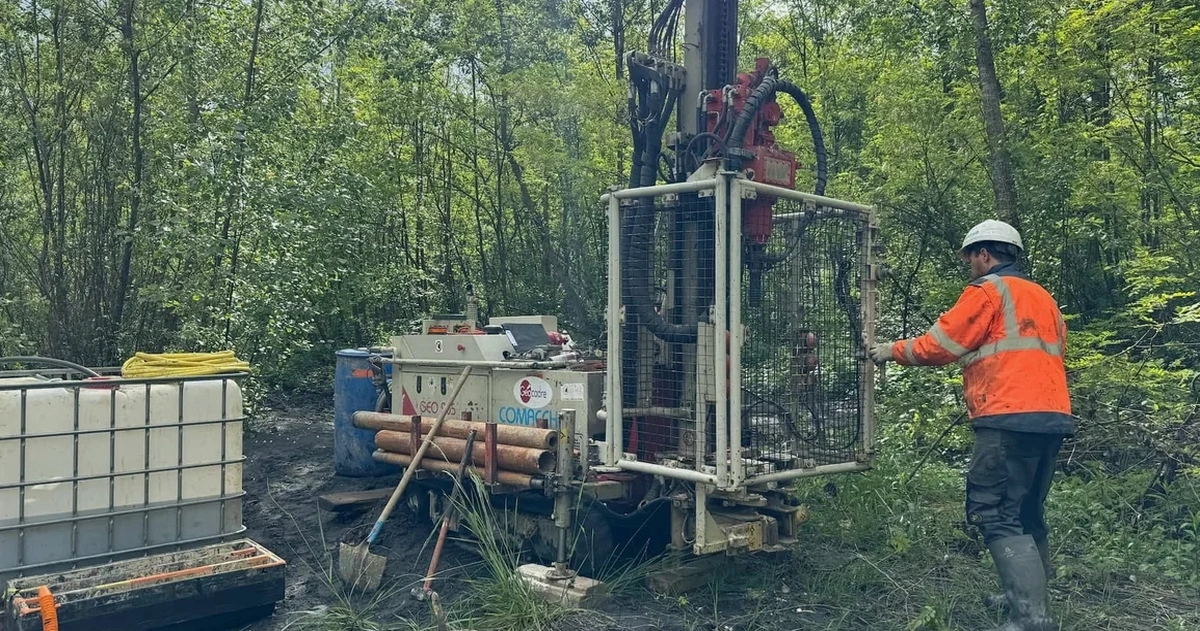
Reading’s geology catches out a lot of builders. The town sits on a mix of London Clay, river terrace gravels, and alluvium, and the transition between them can happen within a few metres. We have seen projects where the borehole log showed stiff clay at one end of the site and loose saturated sand at the other. A proper soil mechanics study picks up these changes before the digger arrives. The team understands that Reading’s post-industrial land, especially near the Kennet and Thames floodplains, often hides old backfill and buried obstructions. Getting the ground model right at the start prevents overdesign on foundations and stops costly surprises during earthworks. It is not just a report for building control. It is a financial decision that pays back before the first concrete pour.
A soil mechanics study in Reading is not a box-ticking exercise. It is the difference between a foundation that works with the ground and one that fights it.
Approach and scope
The winter water table in Reading sits high, particularly between November and March when the chalk aquifer recharges and the Kennet Valley holds surface water. This seasonal saturation changes everything about soil behaviour. London Clay swells and shrinks with moisture, which is why so many period properties in Caversham have historic movement. Terrace gravels drain fast but lose strength when clean and uncemented. We test for drained and undrained parameters depending on the stratum, because a single set of values does not work across the whole sequence. Our laboratory runs consolidated-undrained triaxial tests with pore pressure measurement, direct shear on granular samples, and oedometer consolidation to nail down settlement curves. The field programme includes SPT energy-calibrated to BS EN ISO 22476-3 and disturbed sampling for index testing. All testing follows our UKAS-accredited schedule so the numbers stand up to technical review by the warranty provider.
Local geotechnical context
Two sites in Reading can sit half a mile apart and behave completely differently. A plot near the Oracle retail area, redeveloped multiple times, often contains a metre or more of made ground with brick fragments, ash, and occasional timber. Foundation loads there need to bypass the fill entirely, usually with piles driven into the gravel or the chalk below. Move south into Shinfield or Arborfield and you are on undisturbed weathered London Clay, where heave potential controls the foundation depth. The biggest financial risk we see is clients assuming uniform ground and ordering a generic foundation design. A soil mechanics study that misses a soft alluvial lens under the gravel can lead to differential settlement that cracks walls and solutions within the first two years. The cost of the study is a fraction of the cost of underpinning later.
Common questions
How much does a soil mechanics study cost for a residential project in Reading?
For a typical single-plot residential project in Reading, the study ranges from £2,850 to £4,140. The final figure depends on the number of boreholes, the depth to competent bearing strata, and the laboratory testing schedule required. Sites with complex geology or restricted access may fall outside this range, and we supply a fixed-price proposal after reviewing the site location and the architect’s plans.
Do I need a soil mechanics study for a small extension in Reading?
Building control will nearly always ask for a ground investigation report, especially in Reading where shrinkable clay and variable fill are common. Even a single-storey extension benefits from knowing the bearing capacity and the risk of clay heave. Without it, the structural engineer has to make conservative assumptions that can inflate the foundation cost significantly.
What laboratory tests are included in a standard study?
A standard package includes moisture content, Atterberg limits, particle size distribution by sieving, and undrained triaxial or direct shear tests depending on the soil type. For sites with clay, we add oedometer consolidation and swell pressure tests. The exact schedule is agreed with the client after the borehole logs are reviewed, so we test what the ground actually requires rather than running a fixed menu.
How long does a soil mechanics study take from start to finish in Reading?
Fieldwork typically takes one to three days on site. Laboratory testing runs for two to three weeks after that, depending on the number of consolidation and triaxial stages. The final report is issued within four weeks of mobilisation. We can fast-track the factual report within ten working days if the project programme demands it, with the interpretative section following shortly after.