← Home · Foundations

Pile Foundation Design in Reading: BS EN 1997 Compliance

Together, we solve the challenges of tomorrow.

LEARN MORE →

The Kennet Valley defines Reading's subsurface profile. The river terrace gravels sit above a thick sequence of London Clay, with the Lambeth Group sands and clays appearing at depth beneath the town centre. Groundwater levels run high, particularly near the Thames floodplain and the Kennet itself. These conditions make shallow footings unreliable for any structure exceeding three storeys. A pile foundation design in Reading must transfer loads through the variable alluvium and into competent bearing strata. Our team correlates site investigation data from cable percussion boreholes with laboratory index testing to select the appropriate pile type. In cohesive soils we specify CFA piles to minimise disturbance. Where granular Lambeth Group beds dominate, driven piles offer better performance. The design process integrates stratigraphic interpretation with structural loading requirements, always following BS EN 1997-1:2004 and the UK National Annex. We complement the ground investigation with CPT testing where the gravels are thin and the clay is soft, and with triaxial testing to obtain drained and undrained strength parameters for the London Clay at the specific depth of the pile toe.

The transition from River Terrace Gravels to London Clay is the critical design interface for every piled foundation in Reading.

Methodology and scope

A recent project on the south bank of the Kennet required a six-storey mixed-use building. The site investigation revealed 4 metres of made ground and soft alluvium overlying the London Clay. The clay itself showed a weathered crust down to 7 metres, with undrained shear strength increasing from 60 kPa to over 150 kPa at 15 metres depth. The pile foundation design in Reading for this structure used 450mm diameter CFA piles founding at 18 metres, socketed into the unweathered clay. We calculated shaft friction using the alpha method from BS 8004:2015, cross-checking against CPT-derived parameters. The pile group was configured to limit differential settlement to 15mm under SLS loads. The design included a pile cap analysis for punching shear and bending moment transfer. Integration with the structural engineer's column layout was critical. We also ran a heave assessment because the deep excavation for the basement triggered unloading of the overconsolidated clay. This required a detailed ground movement analysis and temporary works coordination with the deep excavation contractor.
Pile Foundation Design in Reading: BS EN 1997 Compliance
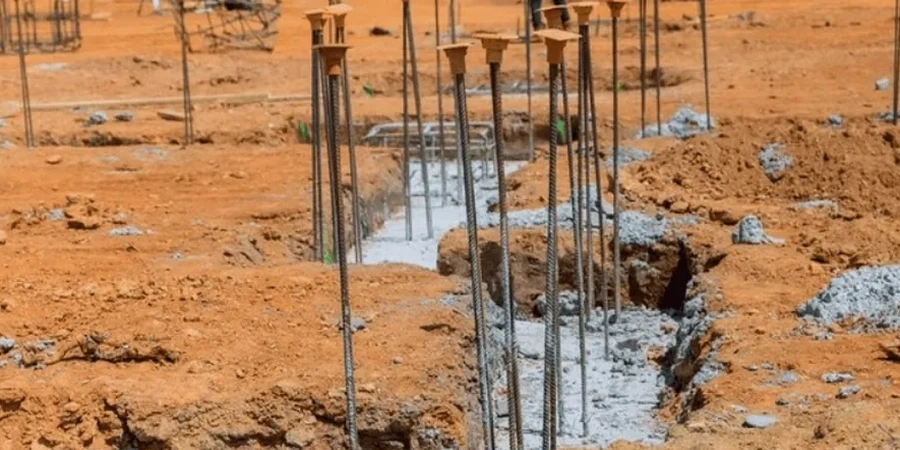
Technical reference image — Reading

Local geotechnical context

A 25-tonne CPT crawler rig positions itself over the test location, its hydraulic rams pushing a 15 cm² cone at 2 cm per second through the gravels and into the clay. The cone resistance jumps sharply at the gravel-clay interface. The friction sleeve captures the skin friction profile directly. This is where the pile foundation design in Reading gains its reliability. Without this continuous profile, the engineer is left interpolating between SPTs taken every 1.5 metres. The transition zone between the terrace gravels and the weathered London Clay can be less than 30 centimetres thick. A misplaced pile toe in that zone means lost capacity. The biggest risk in Reading is not the clay itself. It is the variability of the gravels. Lenses of silt or peat appear without warning. The Lambeth Group sands can carry artesian pressure that destabilises open boreholes during construction. The design must specify drilling fluids or temporary casing sequences. A pile foundation design in Reading that ignores groundwater control during installation will face construction delays and potential base heave. The static load test validates the design assumptions. We specify at least one preliminary test pile per 250 piles, loaded to 1.5 times the working load.

Need a geotechnical assessment?

Reply within 24h.

Email: contact@geotechnical-engineering1.com

Technical parameters

ParameterTypical value
Bearing stratumLondon Clay or Lambeth Group sands
Typical pile depth14 to 24 metres
Design standardBS EN 1997-1:2004 + UK National Annex
Pile types specifiedCFA, driven precast, bored cast-in-place
Shaft friction modelAlpha method (BS 8004) or beta method for sands
Groundwater factorHigh, artesian conditions possible in Lambeth Group
Load test methodStatic maintained load test to BS EN 22477-1

Related services

01

CFA Pile Design and Verification

Design of continuous flight auger piles for the London Clay, including shaft friction and end bearing calculations. We monitor installation parameters and correlate with the ground model to confirm pile toe level.

02

Lambeth Group Pile Solutions

Design for driven piles in the dense sands of the Lambeth Group, including driveability analysis, pile shoe specification, and re-drive testing to assess set-up effects in the granular materials.

Relevant standards

BS EN 1997-1:2004 (Eurocode 7: Geotechnical design – General rules), BS 8004:2015 (Code of practice for foundations), BS 5930:2015 (Code of practice for ground investigations), BS EN 22477-1:2018 (Geotechnical testing – Testing of piles by static load testing)

Common questions

How much does pile foundation design cost in Reading?

The design fee for a pile foundation in Reading typically ranges from £1,250 to £5,410, depending on the number of piles, the complexity of the ground conditions, and the level of site investigation data already available. A design for a small extension with four piles will be at the lower end. A multi-storey building with pile groups and a deep basement will require more detailed analysis and falls at the upper end.

Which pile type works best in London Clay?

CFA piles are the most common choice for London Clay in Reading. They install quickly, generate low vibration, and the auger extraction leaves a clean shaft. The undrained shear strength of the clay provides good shaft friction. In areas where the clay is thinner and granular Lambeth Group soils are within reach, driven precast concrete piles may be more economical and provide higher end bearing capacity.

What site investigation is needed before pile design?

A proper pile foundation design in Reading requires at least one cable percussion borehole to 25 metres depth with SPTs every 1.5 metres, plus undisturbed U100 samples in the clay. CPTs are highly recommended to get a continuous strength profile. Laboratory testing must include triaxial compression tests, Atterberg limits, and particle size distribution. If the Lambeth Group sands are encountered, permeability tests are essential for groundwater control design.

Do you provide pile load testing in Reading?

Yes, we specify and supervise static maintained load tests to BS EN 22477-1. The test applies incremental loads to the pile head and measures settlement at each stage. We typically test to 1.5 times the working load. The results validate the design parameters and can often justify a reduction in the pile length or diameter, offsetting the test cost.
Location and service area

We serve projects in Reading and surrounding areas.

View larger map